
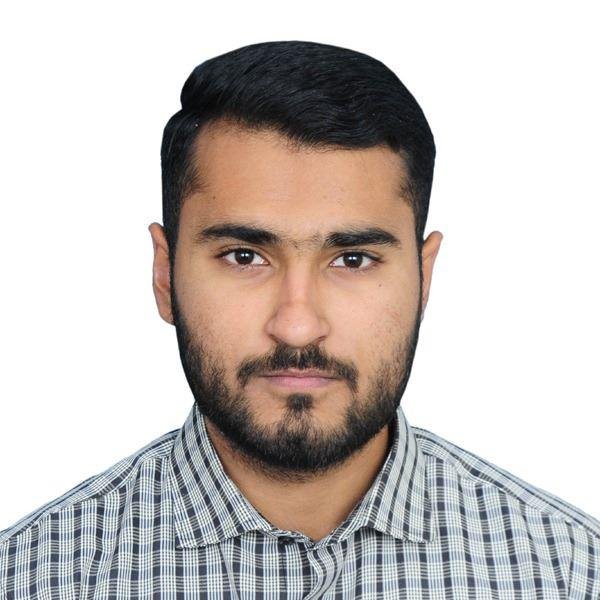
Mr. Muhammad Moazam Shahid
Lecturer
Muhammad Moazam Shahid received his B.Sc. in Software Engineering with First Class Honours from the University of Management and Technology, Pakistan, in 2021, and his M.Sc. in Computer Science with Distinction from Nottingham Trent University (NTU), United Kingdom, in 2023. He previously served as a Research Assistant in the Department of Computer Science at Nottingham Trent University, where he contributed to advanced research in intelligent sensing systems and real-time data-driven technologies.
His research expertise lies at the intersection of embedded systems, robotics, artificial intelligence, and machine learning, with a particular focus on human activity recognition, indoor positioning, and fall detection using wearable sensor data. He has significant experience in designing and developing intelligent, low-power, and real-time monitoring systems, integrating multi-sensor data fusion techniques and deep learning models to enhance performance, reliability, and scalability in real-world applications. His work is especially oriented towards supporting assisted living environments and enabling independent elderly care through smart healthcare technologies.
During his time as a Research Assistant, he also contributed to teaching and mentorship by supporting undergraduate and postgraduate students in laboratory sessions, project supervision, and providing technical guidance, fostering both academic development and practical research skills.
Muhammad’s research expertise and contributions have led to several publications in internationally recognized venues, including IEEE conferences and journals, where he has served as the first author on multiple papers. His work highlights innovative approaches in smart health monitoring, sensor fusion, and AI-driven embedded systems, demonstrating both technical depth and practical impact in real-world applications.
In recognition of his academic excellence and research innovation, he was awarded the Best MSc Project Award at NTU. His long-term research vision is to advance the integration of AI, robotics, and embedded systems in developing autonomous, energy-efficient, and context-aware healthcare solutions. He aims to bridge the gap between theoretical research and practical deployment, contributing to the next generation of intelligent assistive technologies and smart healthcare ecosystems.